
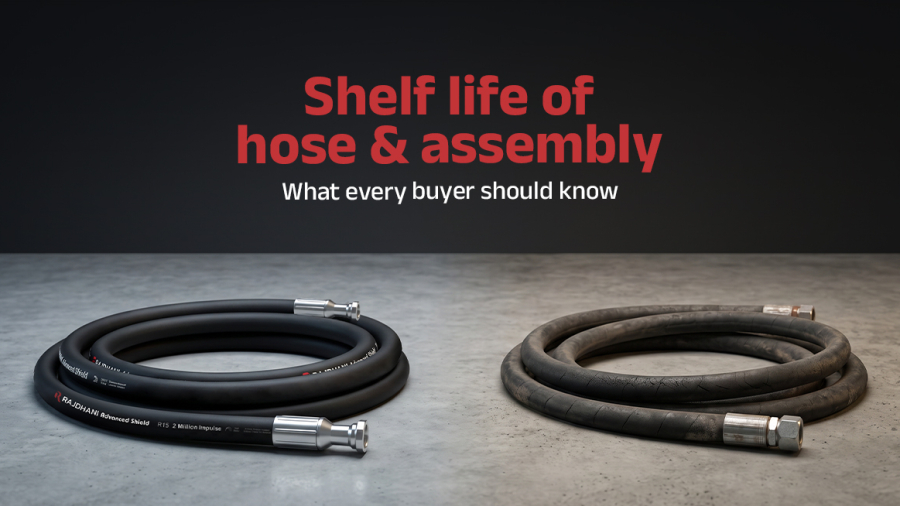
Despite the fact that some hydraulic hoses have never been used, they do not remain operational forever. This is because rubber and other materials of the hose construction can degrade in storage, and there are many environmental influences that can influence the condition of the hose. There is also a difference between the shelf life of the hydraulic hose, storage life of the assembled hose and its operational life when it is already mounted. Therefore, buyers should take into account all these factors and other parameters before using the older hose products.
How Long Does a Hydraulic Hose Last in Storage?
There is no universal shelf life value for all hydraulic hoses. Depending on the material, construction, manufacturer guidelines, and conditions of storage, the acceptable storage period will be different.
According to Gates’ 2026 Hydraulic Hose Products Catalog, the shelf life of the hose is hard to determine due to a number of influencing factors. It is stated that proper storage will allow obtaining the shelf life of about 3-5 years, after which the service life reduction may occur. For example, according to Gates’ guidelines, the hose should be stored in a cool and dry place, with maximum temperature of +38°C and hose inspection before usage.
The practical takeaway is simple: The age of a hose is an important indicator, but it should not be the only basis for deciding whether it is suitable for use.
What Factors Affect Hydraulic Hose Shelf Life?
Storage conditions play a major role in maintaining the condition of hydraulic hose. Even a hose within its recommended storage period can deteriorate if it is exposed to unsuitable conditions.
1. Temperature
Excessive heat speeds up the aging process of rubber compounds and may affect their flexibility. Gates advises that hydraulic hoses be stored in cool and dry conditions, where storage temperatures remain below +38°C.
Very low temperatures can also affect handling. Hose stored below freezing may require appropriate pre-warming before handling, testing or placing it into service.
2. Direct Sunlight and UV Exposure
Sunlight may contribute to the fast aging of hose covers. Thus, protection of the hose from sun exposure is necessary.
3. Chemicals, Oils and Fumes
Oil, solvents, corrosive substances and chemical vapors may affect the hose material depending on their composition. Hydraulic hoses need to be kept away from materials that can deteriorate the hose material.
4. Improper Stacking and Handling
The hoses must not be stacked to excess or stored in a manner in which they can become deformed permanently. The recommendation by Gates is that the hoses be stored in their original packaging and without stacking in excess.
5. Time Without Stock Rotation
However, even when storage conditions are adequate, long-term storage needs to be avoided wherever possible. An effective First in, First out (FIFO) system helps to ensure that older hose is used before newer one.
Proper Storage Practices for Hydraulic Hose
Proper storage is the easiest way of maintaining the integrity of the hose before use. ISO 2230:2026 gives recommendations for inspection, registration, packaging and storage of rubber products and assemblies prior to distribution.
1. Store in a Cool, Dry Environment
Hydraulic hoses must be stored in a dry, cool and clean location far from extreme heat and moisture. Elevated temperatures will hasten the aging process of the hose material, while elevated humidity might have an effect on the components of the hose. Gates suggests that hoses be stored in temperatures below +38°C.
2. Protect Hose from Sunlight and Ozone
Ultraviolet light and exposure to the sun will hasten the degradation of rubber hose covers. The hoses must therefore be stored in locations without windows, outdoors or any other source of ultraviolet rays. Locations of storage should minimize exposure to ozone generating equipment that might cause cracking of rubber materials.
3. Keep Hose Away from Chemicals
Hoses should not be stored near any oil, solvents, corrosive materials, chemical fumes or other things that will affect the hose material. Separation of hoses from such contaminations will reduce unnecessary degradation prior to using the product.
4. Avoid Crushing and Improper Stacking
Incorrect handling and excessive stacking may lead to deformation of the hose. Hose assemblies should be stored free from excessive pressure and without any permanent bends, kinking, and crushing. Storing the hose in its original package whenever possible will help prevent degradation during storage period.
5. Maintain Proper Identification and FIFO
Manufacturing dates, product identification and relevant batch information should be maintained throughout the storage period. A First In, First Out (FIFO) system should also be followed so that older hose is used before newer inventory. This helps buyers and suppliers maintain better control over storage age and reduces the possibility of excessively aged stock remaining unused.
What Should Buyers Check Before Purchasing Stored Hose?
When buying hydraulic hose or hose assemblies which have been lying around in stock for some time, buyers should never judge the product on the basis of price or appearance alone.
The following checks can help reduce unnecessary risk:
- Check the manufacturing date: The date of manufacture is where evaluation of storage age begins. Buyers should request product identification and documentation where appropriate.
- Check the hose construction: Rubber, thermoplastic or PTFE hoses could be stored or applied under different conditions. The recommendations of the concerned manufacturer should always prevail.
- Check storage conditions: Find out the storage conditions of the hose in question. A hose stored indoors under controlled conditions is not the same as one which has been kept in heat, sunlight, moisture or chemicals.
- Inspect the hose visually: Any signs of deterioration such as cracking, stiffness, surface deterioration, etc., should always be investigated prior to putting the hose into use.
- Check testing and traceability: If appropriate, buyers should find out whether there has been any inspection and/or testing of the hose or assembly in question. Testing may be necessary according to the age, type of the hose, manufacturer or standards.
As far as a Hydraulic Hose Manufacturer in India goes, consistency in manufacturing, product identification and quality control becomes important for product performance and buyer decision-making.
Why Manufacturing and Assembly Quality Matter
Shelf life is only one part of hydraulic hose reliability. The quality of the hose, fittings and assembly process also influences performance after installation.
There are several key aspects to a good hydraulic assembly including hose selection, proper cutting, correct crimping, dimension check, visual inspection and pressure testing where applicable.
In its engineering process, Rajdhani verifies the hoses and fittings used, inspects the crimping and conducts pressure testing where applicable, leakage check, marking of the ferrule, cleaning and last but not least dispatch inspection.
This engineering process is especially important to a buyer who is interested in Hydraulic Assembly Manufacturer in India because the reliability of a hydraulic system relies not only on the hose itself. Correct component compatibility, assembly practices, testing and traceability all contribute to dependable performance.
Conclusion
Shelf life of the hydraulic hose should not be determined solely by the age of the product. The manufacturing date, hose construction, environmental conditions during storage, packaging, handling, inspection and manufacturer’s recommendation can all determine suitability of the stored hose to be used.
For the buyer it would be the safest way to have a good stock rotation, trace the product properly, inspect the old hose and conduct necessary tests if required. A good supplier will be able to answer any questions related to the product specifications, storing, assembly and testing.
When hydraulic reliability matters, choosing the right hose is only the beginning. Proper storage, correct assembly and informed inspection are equally important to achieving dependable hydraulic system performance.
Frequently Asked Questions
1. How long can a hydraulic hose assembly be stored?
The recommended storage period may differ depending on the manufacturer and the relevant standard. According to some industry recommendations, hose assembly should not be stored for more than two years, and there is an inspection requirement for products stored longer than that.
2. Does a hydraulic hose expire if it is not used?
Hose may degrade even without being put into use. The materials used in the rubber hose may age during storage owing to temperature, ozone, humidity, sunlight and other factors. Therefore, hose assemblies stored should be inspected prior to using.
3. How can you tell if a stored hydraulic hose is still usable?
Inspect hose for its manufacturing date, storage history, product identification, and physical state. Search for cracks, stiffening, deformations, abrasions, broken fittings, exposed reinforcement, and so on. If needed, perform testing prior to usage of the hose.
4. Why is proper storage important for hydraulic hose?
Correct storing of the hose may prevent premature material degradation prior to installation. Correct temperature, protection from sunlight and chemicals, proper packaging, and other storage measures may prolong hose life before the assembly is installed.