Proof Pressure Testing of Hydraulic Hose Assemblies Why It Matters

Proof Pressure Testing of Hydraulic Hose Assemblies: Why It Matters

What Is Proof Pressure Testing of a Hydraulic Hose Assembly?

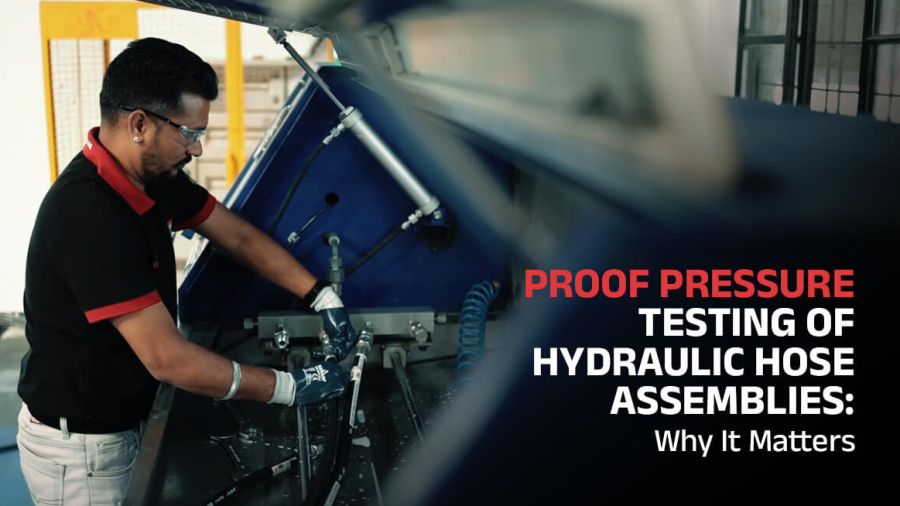
Proof pressure testing is a test performed on an assembled hydraulic hose assembly to confirm its integrity before it is made operational. It tests the assembly as a whole rather than the hose only; the hose, the fittings, the ferrules, the crimping and the assembly process.

It is because a hose that satisfies the minimum pressure criteria could end up being part of an unreliable hose assembly because of using the wrong fitting, improper crimping and poor assembly process. Hence, proof pressure testing is a controlled way of verifying hose assembly integrity.

It is especially crucial in hydraulic systems where hose failure could make the system fail and could raise safety concerns. Rajdhani quality process includes proof pressure testing wherever applicable, along with verification of the hose and the fittings, crimping inspection, visual inspection and leakage inspection.

How Does Proof Pressure Testing Work?

The proof pressure test is carried out on an assembled hose assembly by applying certain test pressure for a certain period and determining if the hose assembly withstands the pressure.

It is worth pointing out that the proof pressure is different from the operating pressure of the assembly. The proper proof pressure and time for holding the pressure depends on various factors such as hose specifications and assembly requirements among others.

For the purpose of testing, there could be conditions such as:

  • Hose to fitting joint leakage
  • Problems with the crimped joint
  • Abnormal movement/deflection
  • Signs of weakness in the assembly
  • Pressure loss or signs of leakage

The objective is simple: Test the final product before exposing it to actual operating conditions.

Why? Because the performance of hydraulic hose assemblies does not depend only on each component but on the interaction between hose, fittings and crimping process.

Also, international standards emphasize this point of view. The latest version of ISO 18752:2025 (fifth edition, June 2025) specifies the requirements for hydraulic hoses and hose assemblies stating that the maximum working pressure of the assembly is dictated by the minimum maximum working pressure of the components.  (ISO)

Proof Pressure vs Working Pressure vs Burst Pressure

All these three terms are sometimes mentioned in one context, but they denote different concepts.

ParameterWhat it meansPrimary purpose
Working PressureThe pressure at which the assembly is designed to operateNormal operation
Proof PressureA specified test pressure applied to verify assembly integrityQuality verification
Burst PressureThe pressure at which the assembly ultimately fails during a destructive testFailure/performance evaluation
  • The working pressure refers to the pressure that should be borne by the hydraulic hose assembly.
  • Proof pressure is a planned verification process where the assembly is subjected to see whether it can withstand the required test pressures without excessive leakage or damage.
  • Burst pressure test, on the other hand, involves destruction of the assembly since the intention is to ascertain the bursting point of the hose.

This is important since proof pressure testing should not be mixed up with burst testing. Passing a proof pressure test for a hydraulic hose assembly does not mean that it should be tested using the test pressure.

Also, there is no one size fits all ratio for proof and burst pressure to working pressure for each hydraulic hose assembly. This should always depend on the specific specification and test requirement.

For instance, SAE J517 specification is a general dimensional and performance specification for hydraulic hoses and it is stated in this specification that the maximum working pressure of an assembly shall not exceed the lower applicable pressure rating of its components. (SAE Mobilus)

Why Test the Complete Hydraulic Hose Assembly?

The performance capability of any hydraulic hose assembly depends on its weakest component and how those components were assembled.

The hose may conform to all its specifications, but there will still be problems with the assembly if:

  • The hose and fitting do not match
  • The fitting is assembled wrongly
  • The crimp dimensions fall outside the required specification
  • There is inconsistency in the assembly process
  • The hose has been damaged during the cutting or assembly process
  • The assembly is prone to leakage when put under pressure

That is why it is important not just to check the hose.

An effective quality process checks the whole assembly from selection of components up to inspection before shipment. The quality process documented by Rajdhani entails checking the hose and fitting, cutting, fitting matching, crimping inspection, proof pressure testing if necessary, and visual inspection for leakage before shipment.

This approach is evident in the industry standard as well. The SAE J516 standard on hydraulic hose fittings states that the rated working pressure of the assembly consisting of SAE J516 fittings and SAE J517 hose shall not exceed the lower working-pressure rating of the two components. (SAE Mobilus)

In practice, the assembly, not a component of it, is installed in the machinery. The quality of the assembly thus has to be evaluated as an assembly.

What Problems Can Proof Pressure Testing Help Identify?

Proof pressure testing does not attempt to anticipate all types of failures that may occur during the assembly’s entire period of operation. Nonetheless, it allows discovering assembly-related issues prior to dispatch.

Depending on the test procedure, proof pressure testing could reveal:

  1. Leakage at connections:
    A proper hose assembly will hold up under certain test conditions. A leak indicates a fault associated with either a connection, fitting, or improper assembly.
  2. Crimping issues:
    Inappropriate crimping may impact the connection between the hose and fitting. Proof pressure testing is an additional way to inspect the connection beside dimensional and visual inspections.
  3. Assembly inconsistencies:
    In case when assembly occurs repeatedly, testing reveals whether the assembly process results in consistently good performance.
  4. Uninspected Problems:
    A hose assembly might appear to be fine from the outside even though it may have some defects revealed only under pressure.

It is because proof pressure testing is meant to become one of the steps in the quality control process and not the whole process itself.

The quality policy of Rajdhani includes testing, component verification, crimping inspection, dimensional inspection, visual inspection, leakage inspection, ferrule marking, cleaning and final assembly inspection.

The idea behind is quite straightforward – quality needs to be proven on the assembly level, not assumed from the individual components.

How Rajdhani Approaches Hydraulic Hose Assembly Testing

Assembly testing at Rajdhani is one of the stages of the general process of quality control rather than a separate procedure.

Rajdhani started 100% assembly testing in 2019 as a part of its approach to quality. Its current assembly process involves checking of the hose and the fittings, proper cutting of the hose, fit of the fittings, inspection of the crimping, pressure testing in case if applicable, leakage checking, ferrule marking, cleaning, and final inspection.

The approach corresponds to one of the main principles of hydraulic hose assembly quality: the quality of the completed assembly goes beyond the pressure rating of the hose itself.

Also, Rajdhani showed its assembly performance in action during EXCON 2025 by performing a live hose burst pressure test. The pressure of the assembly in question was estimated at 4,000 PSI, the standard burst pressure was 16,000 PSI, while the test reached 20,000 PSI. It is a particular example of a test and should not be considered the rating of all the assemblies of Rajdhani.

The point of such tests is not to show the bigger number but the significance of verifying how the assembled product behaves under certain pressure conditions.

Conclusion

Proof pressure testing serves as an important step in verifying the integrity of the assembled hydraulic hose assembly under the prescribed test conditions and detecting problems that might not be visible using component verification.

However, quality hydraulic hose assembly requires all steps to be considered, including proper component selection, crimping, dimension inspection, pressure testing when required, leakage detection, and final inspection.

The point to remember here is that a hydraulic hose assembly must be tested as an assembly and not simply as a hose.

When all relevant steps in the process have been verified, proof pressure testing is a part of a controlled process.

Frequently Asked Questions:

1. What is proof pressure testing in a hydraulic hose assembly?

Proof pressure testing is a controlled testing of a completed hydraulic hose assembly at a specified test pressure to verify its integrity under specified conditions. Proof pressure testing is a quality assurance test and should not be confused with operating pressure or burst pressure testing.

2. Is proof pressure the same as burst pressure?

No. Proof pressure testing verifies the integrity of the assembled hydraulic hose under specified test conditions, whereas burst pressure is the pressure at which an assembly finally fails under the conditions of destructive testing.

3. Why should the complete hose assembly be pressure tested?

Because the final assembly consists of multiple components and processes, including the hose, fittings and crimped connection. Testing the completed assembly can help identify leakage or assembly-related issues that may not be evident from inspecting the hose alone.

4. Does every hydraulic hose assembly require proof pressure testing?

The applicable testing requirement depends on the hose type, assembly specification, standard and application. Proof pressure testing should therefore be determined according to the relevant requirements rather than assumed to follow one universal test pressure.
Hydraulic Tubing vs. Hydraulic Hose What You Need to Know

Hydraulic Tubing vs. Hydraulic Hose: What You Need to Know

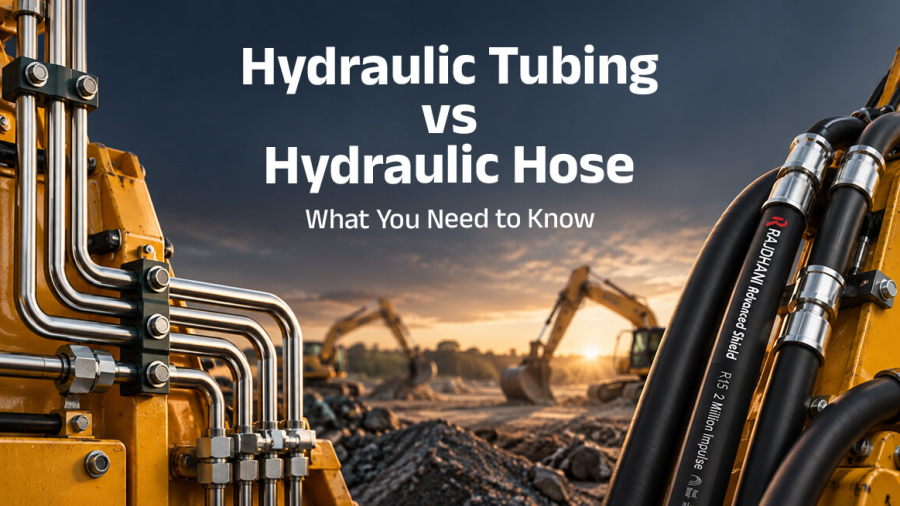
While both hydraulic tubing and hose lines convey pressurized fluid through systems, each one is appropriate under varying circumstances. Tubing is normally used in rigid lines where permanent routing and support can be achieved, while hose is usually the ideal option in cases where there is movement, vibration and need for frequent maintenance or more difficult routing. Various considerations like pressure, temperature, fluids compatibility, movement, bending radius and fittings should determine the most suitable option for an application.

The selection process is neither based solely on the flexibility nor the cost but on whether the fluid line will adequately respond to the needs of the hydraulic system and its operation.

What Is Hydraulic Tubing?

Hydraulic tubing is a rigid or semi-rigid fluid line which is usually made up of metals such as steel or stainless steel, depending on the intended use. It is bent and formed to route hydraulic components in a specific manner.

Due to its rigidity, tubing is the best choice for permanent hydraulic circuits, machinery panels and applications where the routing is mostly fixed. Support and proper forming are critical as any poor routing of the tubing will cause stress and vibration problems.

Tubing can provide a clean, permanent installation, but it requires the line to be correctly measured, bent and connected. Changes to the machine layout or replacement of a formed tube can therefore require more installation work.

SAE specification of the hose used is another important issue to consider. For instance, SAE J524 provides seamless low-carbon steel tubing suitable for use in hydraulic lines and in applications requiring bending and flaring of tubing. The current SAE listing was stabilised in December 2025, making it a useful reference when specifying this type of hydraulic tubing.

What Is a Hydraulic Hose?

The hydraulic hose is a flexible conduit consisting of an inner tube, reinforcing layers, and an outer cover. The flexibility of the hose is provided by its design and allows accommodating movement and vibration during the transportation of fluid under pressure.

Due to that, the hose is particularly suitable for use in mobile systems, flexible assemblies and vibrating equipment. Flexibility of a hose assembly also helps simplify maintenance as the assembly can be replaced without forming a new flexible line.

However, flexibility does not allow neglecting the restrictions on the usage of the hose. Bend radius, twisting, abrasion, temperature range, pressure and environmental factors all affect the performance of hose. Selection of hose should take into account the actual working environment instead of the nominal pressure rating.

The SAE J517 specification provides general and dimensional characteristics as well as performance requirements for commonly used hydraulic hoses. One of the most important considerations that this standard provides is regarding the maximum working pressure of a hose assembly, which cannot exceed the lower of the two ratings of the hose or fitting.

Hydraulic Tubing vs. Hydraulic Hose: Key Differences

FactorHydraulic TubingHydraulic Hose
ConstructionRigid/semi-rigid metalFlexible reinforced construction
FlexibilityLimitedHigh
MovementBest for fixed connectionsSuitable for moving connections
VibrationRequires proper supportBetter suited to vibration and movement
RoutingRequires forming and bendingEasier around complex routes
InstallationRequires accurate formingEasier to install and replace
MaintenanceReplacement may require re-formingAssembly can be replaced directly
Typical useFixed hydraulic lines and panelsMobile, vibrating or moving sections
Key considerationsMaterial, OD, wall thickness, pressure and fittingsPressure, temperature, fluid, bend radius and fittings

This difference is illustrated above, but in reality, hydraulic systems are usually more complex than this example. The same system might utilize both tubing and hoses, with both being used in the parts of the circuit where they have some kind of technical advantage.

When Should You Choose Hydraulic Tubing?

Hydraulic tubing is usually a good fit for cases when the hydraulic line will take a certain route which is known in advance and no need arises to allow for any significant movement.

This type of tubing may be successfully used in hydraulic panels, machine assembly and in stationary parts of industrial machinery where the line can be measured, shaped and mounted. After the installation, the fixed routing will give a solid connection between different elements.

In the case of moving connections or presence of vibrations, tubing is not the best solution. In these cases, an attempt to bend the line in order to allow for movements may lead to unnecessary stress on the line.

So the choice of tubing or hose should start from the consideration of working conditions.

When Should You Choose Hydraulic Hose?

In most cases, a hydraulic hose turns out to be a more realistic choice if there is a need for a hydraulic connection to be movable, flexible or capable of dampening vibrations.

This is especially true for construction and earthmoving equipment, agricultural machinery, mining equipment and other machines where cylinders, attachments or other elements are movable during the process. Hoses also become necessary if the hydraulic line needs to be routed through the restricted or variable space that would make formation of rigid tubing difficult.

On the other hand, selecting a hose needs to consider more than simply the pressure range. Working pressure, impulses, temperature, hydraulic fluid, bend radius, abrasions, vibration and environment are among factors affecting the proper choice of hose and its service life.

What should be kept in mind is the following: just because the installation is difficult, a flexible hose is not always the best choice. It also needs to be properly selected for the system.

What Should You Consider Before Selecting a Hydraulic Line?

Whether or not to use tubing or hose must be determined by the operating conditions of the hydraulic system. In choosing between these options, it is essential to take into account:

  • Working pressure: The line selected should be capable of handling the highest possible system pressure as well as pressure impulses. For hose assemblies, SAE J517 states that the assembly must have a rating lower than the lower applicable rating of the hose or connector.
  • Temperature and fluid: Temperature and the hydraulic fluid used could affect the material properties. The hose, tubing and all the sealing materials should be compatible with the fluid as well as the operating temperature.
  • Motion and vibration: In case of any motion or vibration of the components, flexibility plays a role in hose selection. Hoses would be better suited for such connections.
  • Bend radius and routing: Never force a hose into a bend that is tighter than the hose’s minimum bend radius. Any incorrect routing or twisting will shorten hose service life.
  • Fittings and connections: The tube or hose is not the only component of the hydraulic connection. The thread matching and the type of the fitting and sealing are also to be considered. 

In other words, selection should be based on the complete hydraulic connection, not just the line itself.

Why Correct Assembly Matters

Hose selection is just a part of the equation. Hydraulic hose assembly effectiveness is dependent on the right hose, proper fittings, right cuttings, proper crimpings and inspection.

This is where a holistic perspective becomes crucial. Assembly can have the right hose specifications and still cause issues because of improper fitting, out-of-specification crimping or too much stress put on the hose.

The way Rajdhani sees hydraulic hose assembly is that the whole assembly must be taken into account, not its separate parts. The process involves hose and fitting verification, proper cutting and crimping, testing and quality check before shipment.

The idea is simple – the assembly should fit the application, not the other way round.

Hydraulic Tubing or Hydraulic Hose: Which Is Right?

There is no single winner in terms of hydraulic tubing vs. hydraulic hose.

Tubing should be used in case of fixed and certain connections, which are properly shaped and supported. Hose is better in case of flexible connections, which require movement or vibration resistance.

Many hydraulic systems need both tubing and hose. The thing is that each segment of the hydraulic circuit should be examined in order to decide what kind of line is needed.

For any hydraulic application, pressure, temperature, fluid compatibility, movement, routing and connection requirements should be evaluated together before the final assembly is specified.

Frequently Asked Questions:

1. What is the main difference between hydraulic hose and hydraulic tubing?

The hydraulic tubing is defined as a rigid or semi-rigid line that is primarily meant for routing through fixed locations, whereas hydraulic hose is a flexible line that is better suitable for movements and vibrations.

2. Is hydraulic tubing stronger than hydraulic hose?

No. It is not necessary. Both strength and suitability depend on the particular specification, pressure ratings, materials, and applications. Always select a line for your particular application.

3. When do I have to use a hydraulic hose instead of tubing?

Generally, the hydraulic hose is preferred when there is some movement or vibration or any flexible routing of components is required. The hose may also be preferable when there is a need to replace or service the assembly regularly.

4. Can hydraulic hose and tubing be used simultaneously?

Yes. The tubing could be used for rigid portions, whereas the hydraulic hose could be used for the moving or vibrating connections. Proper fittings have to be used for the connection between them.

5. What should I consider before selecting a hydraulic hose?

Working pressure, temperature, fluid compatibility, hose size, bend radius, movement, vibration, environmental exposure and fittings compatibility. You have to ensure the whole assembly is suitable for your application, not just the hose itself.

The Role of Compliance and Standards in Hydraulic Fitting Manufacturers

The Role of Compliance and Standards in Hydraulic Fitting Manufacturers

Hydraulic fittings may be small parts but their importance within a hydraulic system cannot be downplayed. Their function is to connect hoses and tubes as well as other components and assist the system to deal with pressure, temperature and flow effectively. Compliance and standards are therefore crucial considerations in the manufacturing of hydraulic fittings. Standards set guidelines for the dimension, interface, performance and tests for the fittings which help manufacturers to manufacture consistently performing fittings. In choosing hose fittings manufacturers in India, compliance becomes much more than just a certification process. It becomes an indication of the systematic way in which the manufacturer controls the product quality and compatibility.

What Compliance Means for Hydraulic Fitting Manufacturers and Why Standards Matter: 

Compliance in a hydraulic fitting manufacturer refers to manufacturing of components in accordance with the established technical requirements suitable for their application. Requirements could be about dimensions, connections, material, pressure resistance, performance and tests among others. The purpose of compliance is to minimize the differences among components and have a consistent manufacturing and quality control basis.

This becomes particularly important because a hydraulic fitting does not work in isolation. Its performance depends on how it interfaces with the hose, tube, port and other components in the hydraulic assembly. SAE J516, for example, provides general and dimensional specifications for commonly used hydraulic hose fittings and states that the rated working pressure of an assembly using SAE J516 fittings and SAE J517 hose cannot exceed the lower pressure rating of the two components.

Standards also provide manufacturers and buyers with a common technical reference. Instead of relying only on visual similarity or individual manufacturing practices, dimensions and performance can be evaluated against established specifications. This is especially important in industrial applications where hydraulic systems may operate under high pressure and where a fitting failure can result in leakage, equipment downtime or safety risks.

The role of standards is much larger than that of the fitting itself. ISO 4413 outlines the general principles and safety requirements for hydraulic fluid power systems and components.

Following standards by manufacturers therefore becomes the foundation of consistency throughout the production process. To the buyer, compliance gives a better basis of determining whether a fitting is suitable for the application.

Key Standards Relevant to Hydraulic Fittings and Assemblies:

There is no generic standard that applies to any hydraulic fitting; the relevant standard is determined based on the design, connection type and the use of the hydraulic fitting. Important standards and resources to consult include:

  • SAE J516 – Hydraulic Hose Fittings: Establishes general and dimensional requirements for hydraulic hose fittings that will connect hydraulic hoses that are classified according to SAE J517.
  • SAE J517 – Hydraulic Hose: Specifies the characteristics of hydraulic hoses and is one of the most important references when assessing hose-to-fitting compatibility in assemblies.
  • ISO 8434-1 – 24° Cone Connectors: Sets out general and dimensional requirements for 24° cone connectors, pressure and temperature rating information and qualification testing.
  • ISO 8434-2 – 37° Flared Connectors: Deals with general and dimensional requirements and performance qualification testing for 37° flared connectors that are used in fluid power applications.
  • ISO 4413 – Hydraulic Fluid Power: Contains general rules and safety requirements for hydraulic systems and components (design, assembly, installation and reliable operation).

However, the above-mentioned standards cannot be considered interchangeable certifications. Every of the standards relates to certain specifics of the hydraulic connections or system in question.

How Compliance Should Reflect in the Manufacturing Process:

Compliance is important only if it is shown in the manufacturing process of a fitting. The process of manufacturing should have the following elements:

  • Material and Specification Control – Selection of Materials and Specifications depending on use and specifications.
  • Dimensional Inspection – Inspection of critical dimensional requirements, profiles, threads and interface of connections to ensure consistency and compatibility.
  • Hose and Fittings Compatibility Inspection – To confirm that selected fitting matches the corresponding hose, connection type, pressure and use.
  • Controlled Machining and Manufacturing – Ensuring controlled production parameters to make sure that fittings stay consistent from production to production.
  • Pressure Testing – Performing required pressure tests to ensure that component performs within its designated operational requirements.
  • Crimping and Assembly Inspection – Control of crimp dimensions, fitting insertion and assembly of fittings where used in assembly of hoses.
  • Visual Inspection – Inspection of manufacturing flaws, damages, contamination or any condition which may have an impact on assembly performance.
  • Product Identification and Traceability – Appropriate product identification and production record to be able to trace components for any investigation.

The above process follows Rajdhani’s own quality process consisting of hose and fittings inspection, cut accuracy, fitting match up, crimping inspection, pressure testing, visual inspection, leakage test, marking of ferrule, cleaning, packing and finally inspection before shipment.

What Buyers Should Look for in Hose Fittings Manufacturers in India:

When considering the selection of hose fittings manufacturers in India, buyers need to consider the following:

  • Applicable standards (SAE & ISO) for the required fitting
  • Dimensions and connections of the fitting
  • Pressure and temperature rating specifications
  • Control over materials and products
  • Compatibility of hose and fitting
  • Pressure and performance test
  • Dimension and visual inspection
  • Identification and traceability of the product
  • Controlled crimping and assembly process
  • Documentation and product specifications
  • Technical support for application
  • Consistency in batches and repeat orders

Availability plays an important role when selecting hose fittings suppliers in India but should not be the sole factor. Technical capability to supply technically correct products, consistent specifications and sufficient product information that can be used by buyers to select the right products and assemble the fitting are some other requirements expected from a supplier in hydraulic applications.

The approach adopted by Rajdhani towards quality of hydraulic hoses and fittings is holistic and considers all aspects of the hydraulic systems. It includes verification of hose and fittings, selection of products based on standards, pressure and impulse test, dimensional verification, proper crimping and technical inspection.

Conclusion:

Compliance and standards provide a way to ensure the reliability, consistency and suitability of hydraulic fittings. They define the criteria against which manufacturers can control dimensions, interfaces, performance and quality at the stage of manufacture.

From the buyer’s perspective, however, compliance should not be determined just by finding the number of a standard in a product catalogue. What matters is how the requirements are turned into manufacturing controls, testing, inspection, compatibility and traceability.

In a hydraulic system, the fitting is only one of the parts in a connected assembly. The reliability of the fitting depends on its proper relationship with the hose, fitting, connection and operation conditions. Therefore, choosing a supplier with proper quality management processes and compliance with appropriate standards can minimize uncertainties prior to assembling the fitting.

Where a failure of the hydraulic systems can cause problems like leakage, downtimes, maintenance cost and safety issues, consistency is not a bonus feature but an integral part of the product.

Frequently Asked Questions:

1. Which standards are commonly associated with hydraulic fittings?
Standards that are relevant to each particular case should be determined based on the suitable type and application of fittings. SAE J516 applies to general hydraulic hose fittings, and ISO 8434 specifies connector types, including 24° cone and 37° flared fittings. ISO 4413 provides safety requirements for hydraulic systems and its components.

2. Does a standard-compliant fitting automatically make an entire hydraulic assembly safe?
No. All parts’ ratings, as well as proper assembly and application, determine how safe the entire assembly will be. As SAE J516 states, the rated working pressure of an assembly shall not exceed the lower applicable rating of either the hose or the fitting.

3. Why is dimensional accuracy important in hydraulic fittings?
Having accurate dimensions is important in order to ensure that a fitting is assembled with a certain hose, tube or port successfully.

4. Are all hydraulic fittings interchangeable?
No. Fittings can differ in connection type, dimensions, thread, sealing method, material, pressure rating and application. A fitting should be selected according to the specific hose, port and operating requirements.

Shelf Life of Hose & Assembly What Every Buyer Should Know

Shelf Life of Hose & Assembly: What Every Buyer Should Know

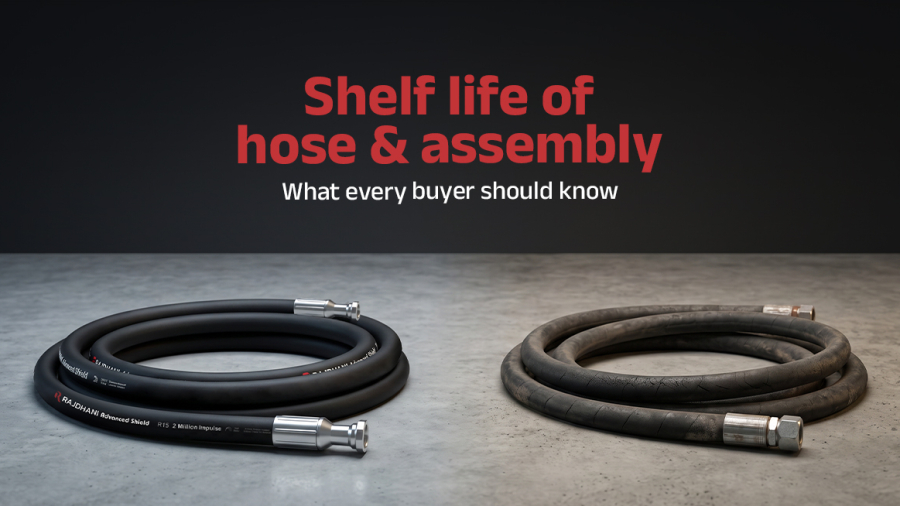
Despite the fact that some hydraulic hoses have never been used, they do not remain operational forever. This is because rubber and other materials of the hose construction can degrade in storage, and there are many environmental influences that can influence the condition of the hose. There is also a difference between the shelf life of the hydraulic hose, storage life of the assembled hose and its operational life when it is already mounted. Therefore, buyers should take into account all these factors and other parameters before using the older hose products.

How Long Does a Hydraulic Hose Last in Storage?

There is no universal shelf life value for all hydraulic hoses. Depending on the material, construction, manufacturer guidelines, and conditions of storage, the acceptable storage period will be different.

According to Gates’ 2026 Hydraulic Hose Products Catalog, the shelf life of the hose is hard to determine due to a number of influencing factors. It is stated that proper storage will allow obtaining the shelf life of about 3-5 years, after which the service life reduction may occur. For example, according to Gates’ guidelines, the hose should be stored in a cool and dry place, with maximum temperature of +38°C and hose inspection before usage.

The practical takeaway is simple: The age of a hose is an important indicator, but it should not be the only basis for deciding whether it is suitable for use.

What Factors Affect Hydraulic Hose Shelf Life?

Storage conditions play a major role in maintaining the condition of hydraulic hose. Even a hose within its recommended storage period can deteriorate if it is exposed to unsuitable conditions.

1. Temperature
Excessive heat speeds up the aging process of rubber compounds and may affect their flexibility. Gates advises that hydraulic hoses be stored in cool and dry conditions, where storage temperatures remain below +38°C.

Very low temperatures can also affect handling. Hose stored below freezing may require appropriate pre-warming before handling, testing or placing it into service.

2. Direct Sunlight and UV Exposure
Sunlight may contribute to the fast aging of hose covers. Thus, protection of the hose from sun exposure is necessary.

3. Chemicals, Oils and Fumes
Oil, solvents, corrosive substances and chemical vapors may affect the hose material depending on their composition. Hydraulic hoses need to be kept away from materials that can deteriorate the hose material.

4. Improper Stacking and Handling
The hoses must not be stacked to excess or stored in a manner in which they can become deformed permanently. The recommendation by Gates is that the hoses be stored in their original packaging and without stacking in excess.

5. Time Without Stock Rotation
However, even when storage conditions are adequate, long-term storage needs to be avoided wherever possible. An effective First in, First out (FIFO) system helps to ensure that older hose is used before newer one.

Proper Storage Practices for Hydraulic Hose

Proper storage is the easiest way of maintaining the integrity of the hose before use. ISO 2230:2026 gives recommendations for inspection, registration, packaging and storage of rubber products and assemblies prior to distribution.

1. Store in a Cool, Dry Environment

Hydraulic hoses must be stored in a dry, cool and clean location far from extreme heat and moisture. Elevated temperatures will hasten the aging process of the hose material, while elevated humidity might have an effect on the components of the hose. Gates suggests that hoses be stored in temperatures below +38°C.

2. Protect Hose from Sunlight and Ozone

Ultraviolet light and exposure to the sun will hasten the degradation of rubber hose covers. The hoses must therefore be stored in locations without windows, outdoors or any other source of ultraviolet rays. Locations of storage should minimize exposure to ozone generating equipment that might cause cracking of rubber materials.

3. Keep Hose Away from Chemicals

Hoses should not be stored near any oil, solvents, corrosive materials, chemical fumes or other things that will affect the hose material. Separation of hoses from such contaminations will reduce unnecessary degradation prior to using the product.

4. Avoid Crushing and Improper Stacking

Incorrect handling and excessive stacking may lead to deformation of the hose. Hose assemblies should be stored free from excessive pressure and without any permanent bends, kinking, and crushing. Storing the hose in its original package whenever possible will help prevent degradation during storage period.

5. Maintain Proper Identification and FIFO

Manufacturing dates, product identification and relevant batch information should be maintained throughout the storage period. A First In, First Out (FIFO) system should also be followed so that older hose is used before newer inventory. This helps buyers and suppliers maintain better control over storage age and reduces the possibility of excessively aged stock remaining unused.

What Should Buyers Check Before Purchasing Stored Hose?

When buying hydraulic hose or hose assemblies which have been lying around in stock for some time, buyers should never judge the product on the basis of price or appearance alone.

The following checks can help reduce unnecessary risk:

  1. Check the manufacturing date: The date of manufacture is where evaluation of storage age begins. Buyers should request product identification and documentation where appropriate.
  2. Check the hose construction: Rubber, thermoplastic or PTFE hoses could be stored or applied under different conditions. The recommendations of the concerned manufacturer should always prevail.
  3. Check storage conditions: Find out the storage conditions of the hose in question. A hose stored indoors under controlled conditions is not the same as one which has been kept in heat, sunlight, moisture or chemicals.
  4. Inspect the hose visually: Any signs of deterioration such as cracking, stiffness, surface deterioration, etc., should always be investigated prior to putting the hose into use.
  5. Check testing and traceability: If appropriate, buyers should find out whether there has been any inspection and/or testing of the hose or assembly in question. Testing may be necessary according to the age, type of the hose, manufacturer or standards.

As far as a Hydraulic Hose Manufacturer in India goes, consistency in manufacturing, product identification and quality control becomes important for product performance and buyer decision-making.

Why Manufacturing and Assembly Quality Matter

Shelf life is only one part of hydraulic hose reliability. The quality of the hose, fittings and assembly process also influences performance after installation.

There are several key aspects to a good hydraulic assembly including hose selection, proper cutting, correct crimping, dimension check, visual inspection and pressure testing where applicable.

In its engineering process, Rajdhani verifies the hoses and fittings used, inspects the crimping and conducts pressure testing where applicable, leakage check, marking of the ferrule, cleaning and last but not least dispatch inspection.

This engineering process is especially important to a buyer who is interested in Hydraulic Assembly Manufacturer in India because the reliability of a hydraulic system relies not only on the hose itself. Correct component compatibility, assembly practices, testing and traceability all contribute to dependable performance.

Conclusion

Shelf life of the hydraulic hose should not be determined solely by the age of the product. The manufacturing date, hose construction, environmental conditions during storage, packaging, handling, inspection and manufacturer’s recommendation can all determine suitability of the stored hose to be used.

For the buyer it would be the safest way to have a good stock rotation, trace the product properly, inspect the old hose and conduct necessary tests if required. A good supplier will be able to answer any questions related to the product specifications, storing, assembly and testing.

When hydraulic reliability matters, choosing the right hose is only the beginning. Proper storage, correct assembly and informed inspection are equally important to achieving dependable hydraulic system performance.

Frequently Asked Questions

1. How long can a hydraulic hose assembly be stored?

The recommended storage period may differ depending on the manufacturer and the relevant standard. According to some industry recommendations, hose assembly should not be stored for more than two years, and there is an inspection requirement for products stored longer than that.

2. Does a hydraulic hose expire if it is not used?

Hose may degrade even without being put into use. The materials used in the rubber hose may age during storage owing to temperature, ozone, humidity, sunlight and other factors. Therefore, hose assemblies stored should be inspected prior to using.

3. How can you tell if a stored hydraulic hose is still usable?

Inspect hose for its manufacturing date, storage history, product identification, and physical state. Search for cracks, stiffening, deformations, abrasions, broken fittings, exposed reinforcement, and so on. If needed, perform testing prior to usage of the hose.

4. Why is proper storage important for hydraulic hose?

Correct storing of the hose may prevent premature material degradation prior to installation. Correct temperature, protection from sunlight and chemicals, proper packaging, and other storage measures may prolong hose life before the assembly is installed.

Hydraulic Hose Maintenance Guide Prolonging Performance

Hydraulic Hose Maintenance Guide: Prolonging Performance

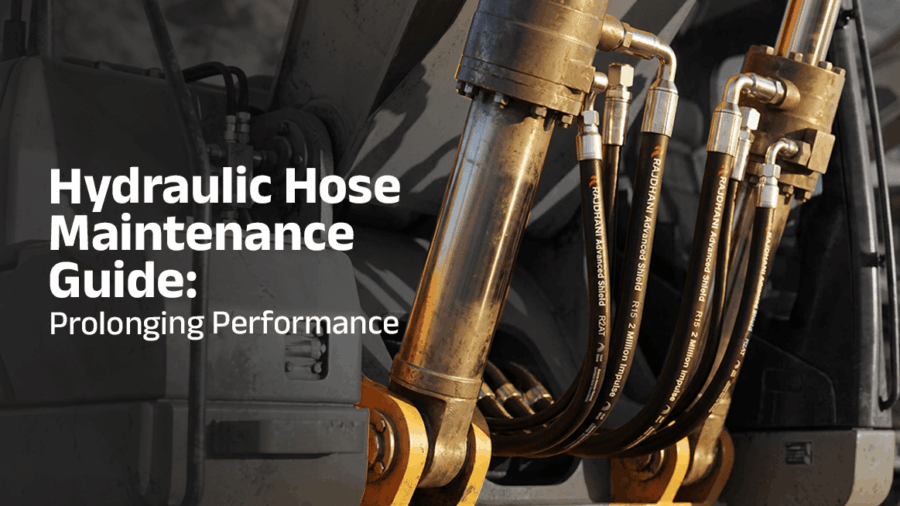
Hydraulic hose maintenance is one of the simplest ways to improve machine uptime, reduce leak risks, and extend hose life. For factories, construction equipment, and other heavy-duty systems, regular care matters as much as the hose quality itself. Good maintenance also helps buyers choose better products from hydraulic hose manufacturers in India, hydraulic hose manufacturers, industrial hose suppliers, and high-pressure hydraulic hose manufacturers.

A hydraulic hose often works under heat, pressure, vibration, and movement every day. If it is ignored, small issues like abrasion, twisting, loose fittings, or contamination can quickly turn into breakdowns. That is why a practical maintenance routine is important for long service life and safe operation.

What Affects Hose Life?

Several factors decide how long a hose assembly will perform well. Pressure, temperature, fluid compatibility, routing, and installation quality all matter. Even a high-quality hose can fail early if it is bent too tightly, installed with twist, or exposed to abrasion.

The operating environment also plays a major role. Dust, heat, chemicals, moving parts, and repeated machine motion can damage the outer cover and fittings over time. In many industrial applications, the hose is not the problem alone, the system around it is equally important.

Daily & Weekly Checks

A simple visual inspection can catch many problems early. Check hoses for cracks, cuts, bulges, leaks, worn outer covers, and signs of rubbing against nearby surfaces. Also inspect fittings for seepage, corrosion, looseness, or damage around the crimp area.

Make sure the hose is routed properly and not under strain. A hose should not be stretched too tight, twisted, crushed, or forced into a bend tighter than its minimum bend radius. If the hose moves with the machine, it should have enough slack to handle pressure changes and movement safely.

Installation Habits That Help

Many hose failures begin with poor installation. During fitting and routing, keep the assembly clean and use the correct hose and fitting combination. A mismatch between hose size, fitting type, or pressure rating can reduce safety and shorten life.

Double-check that hoses are installed without a twist. Twisting weakens the reinforcement layer and reduces durability. Also use clamps, guards, or sleeves where needed to protect the hose from abrasion, heat, and impact. These small steps can save a lot of downtime later.

Cleaning & Contamination Control

Hydraulic systems are very sensitive to contamination. Dirt, metal particles, and moisture can damage valves, pumps, and hose interiors. When a hose is removed, stored, or installed, keep both ends capped and the work area clean.

If contamination enters the system, pressure and flow performance can suffer. That is why maintenance teams should use clean tools, clean replacement parts, and good handling practices. This is especially important for industrial hose suppliers and OEM users who rely on consistent system performance.

Replacement Timing

A hose should not be used until it fails completely. It should be replaced when there are clear signs of wear, such as cracks, leaks, blistering, repeated abrasion, or damaged fittings. If the hose is near a hot surface or moving part and the protection is already worn away, replacement should be considered early.

Many companies also keep a replacement log based on machine hours and inspection history. This makes it easier to plan maintenance instead of reacting to breakdowns. For businesses that buy from hydraulic hose manufacturers in India or other high-pressure hydraulic hose manufacturers, this approach improves safety and reduces unplanned stoppages.

Storage & Handling

Proper storage can extend hose life before installation. Hoses should be stored in a cool, dry, clean place away from sunlight, oil spills, chemicals, and heavy objects. They should not be bent sharply, stacked under weight, or left on a dirty floor.

During handling, avoid dragging hoses across rough surfaces. That can damage the outer cover and create weak points before the hose is even installed. Good storage and handling practices are often overlooked, but they are part of long-term performance.

Maintenance Checklist

  • Use this simple checklist as part of routine care:
  • Inspect for external cuts, cracks, or wear.
  • Check fittings for leaks or looseness.
  • Confirm there is no twist in the hose.
  • Make sure the bend radius is safe.
  • Look for signs of rubbing or abrasion.
  • Verify hose routing is secure and clean.
  • Replace damaged sleeves, clamps, or guards.
  • Record machine hours and inspection dates.

This checklist works well for factories, equipment yards, and maintenance teams that depend on hydraulic hose manufacturers and industrial hose suppliers for reliable assemblies.

Why Does This Matters for Buyers?

If you are comparing suppliers, maintenance quality tells you a lot about product value. The best hydraulic hose manufacturers do not just sell hoses; they also support safe selection, fitting compatibility, and long-term performance. That is especially important for high-pressure hydraulic hose manufacturers, where system failure can create higher risk and higher repair cost.

For Indian buyers, choosing trusted hydraulic hose manufacturers in India can improve response time, availability, and service support. But even the best product needs proper care to perform well. Maintenance is what protects your investment.

FAQs

  1. How often should hydraulic hoses be inspected?
    A. Inspection frequency depends on the application, but visual checks should be done regularly, especially in high-use industrial machines. Hoses in harsh environments may need more frequent inspection.
  2. What is the most common cause of hose failure?
    A. Common causes include abrasion, twist, poor routing, contamination, overheating, and wrong hose-fittings combination. In many cases, failure starts with installation mistakes.
  3. Can a damaged hose be repaired?
    A. In most industrial applications, damaged hydraulic hoses are usually replaced rather than repaired. Replacement is safer and more reliable, especially for high-pressure systems.
  4. How do I know when to replace a hose?
    A. Replace it if you see leaks, cracks, bulges, worn cover, damaged fittings, or repeated abrasion. If performance drops or the hose has visible damage, do not wait.
  5. Why do suppliers matter in hose maintenance?
    A. Good suppliers help you choose the right hose, fittings, and pressure rating. Reliable hydraulic hose manufacturers and industrial hose suppliers also improve product consistency and service support.

Conclusion

Hydraulic hose maintenance is not complicated, but it must be consistent. Regular inspection, correct routing, proper storage, contamination control, and timely replacement all help prolong performance. For industrial users, the real goal is not just longer hose life, it is safer machines, lower downtime, and better operating efficiency.

Hydraulic Hose Failure Causes and How Quality Suppliers Prevent Them

Hydraulic Hose Failure Causes and How Quality Suppliers Prevent Them

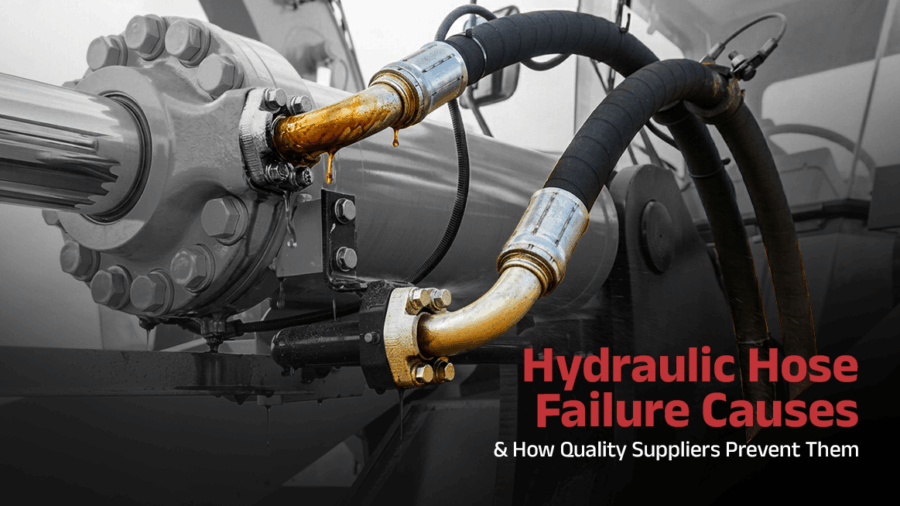
Hydraulic hoses are designed to perform under demanding conditions, but even a minor failure can bring an entire hydraulic system to a halt. Incorrectly selected hoses‚ faulty hose assemblies‚ incorrect installation‚ contamination‚ and poor maintenance are some of the common causes of hose failure․ These factors may cause equipment malfunction, oil spills, expensive repairs, and pose some safety risks.

However, there are many ways to prevent hose failures. One should be aware of the main causes of hose failures, and collaborate with professional hydraulic hose manufacturers in India and industrial hose suppliers. The following article describes the main causes of hydraulic hose failures and provides some information on how quality manufacturers prevent them.

Why Hydraulic Hose Failures Matter

Hydraulic hoses are an important part of any hydraulic system and are used in various industries such as mining‚ construction‚ manufacturing‚ agriculture and steel

Failures of hydraulic hoses can take out the entire system, requiring replacement of the hydraulic hose as well as some other components of the system and result in safety issues and increased maintenance costs. Unexpected shutdowns in industries often cost much more than the hose itself.

That’s the reason good high pressure hydraulic hose manufacturers consider engineering and quality testing very important.

1. Incorrect Hydraulic Hose Selection

The most common cause of hydraulic hose failure is using the wrong hose for the application․ Each hydraulic system has limits on its pressures, temperatures‚ fluid compatibility and minimum bend radius. The use of a hose beyond its working limits may lead to its wear, leakage, and burst.

While choosing a hydraulic hose, the following factors must be considered:

  • Working and surge pressure
  • Operating temperature
  • Compatibility of hydraulic fluid
  • Minimum bend radius
  • Environmental conditions

Hydraulic hose manufacturing companies comply with recognized standards to ensure that their products meet the specifications of the particular application.

2. Poor Assembly Quality

However, even the best quality hose may be prone to failure when not assembled properly. An efficient assembly process requires good compatibility between the hose, fittings, ferrules, and crimping process.

Some of the common assembly problems include:

  • Improper choice of fittings
  • Improper crimping
  • Incompatible hose and coupling combination
  • Poor installation of ferrules
  • Insufficient inspection

Improper assembly process often leads to leakage, poor connections, and pressure failures. That is why professional industrial hose suppliers rely on calibrated machinery, standard assembling procedure, and quality controls.

3. Excessive Pressure Spikes

It should be noted that hydraulic systems are prone to temporary pressure surges due to fast valve movement, load variations, and even system startup. However, such spikes, despite being brief, lead to a reduction in the reinforcement life of the hose.

Hose selection solely based on the continuous operating pressure may not be sufficient. Peak operating conditions also have to be taken into account in order to design an efficient hydraulic system.

Leading manufacturers of high pressure hydraulic hose subject their products to severe operating conditions testing, yet hose selection is still crucial in order to avoid pressure issues.

4. Abrasion and External Damage

External abrasion is perhaps the most frequent cause of failure requiring hydraulic hose replacement. Constant contact with equipment parts, sharp edges, clamps, and other hoses wears down the outer layer of the hose, exposing the underlying reinforcement layer.

Some of the other reasons for external damage are:

  • Incorrect routing
  • Vibration
  • Interaction with moving equipment
  • Impact during operation

Correct routing, installation, protective sleeves, abrasion resistant cover, and proper clamping significantly increase hose lifespan. Indian hydraulic hose manufacturers also offer some helpful installation tips to minimize wear and tear.

5. High Temperature Exposure

Heat stress causes slow destruction of the internal tube and external casing, causing reduction of flexibility and ability to withstand high pressure.

The main reasons for such problems are:

  • High intensity work
  • Poor cooling mechanisms
  • Location of hoses close to engines or exhaust
  • Work of hydraulic fluids under excessive temperature

Using appropriate hoses depending on temperature of operations and providing heat protection can help to increase lifespan of hydraulic equipment

6. Hydraulic Fluid Contamination

Contamination of hydraulic liquid results in low operational performance of the system. Dust, moisture, metal shavings and other foreign objects can cause internal tube destruction, problems with pumps, valves and seals of the hose.

In order to prevent contamination it is required to:

  • Maintain clean hydraulic liquid
  • Implement proper filtration systems
  • Use caps while transporting and storing the hose
  • Clean hose assembly before installation

Industrial hose suppliers know how important it is to provide cleanliness of the whole hydraulic system, not only of the hose itself.

7. Improper Installation

Despite being properly selected, a hydraulic hose can fail due to improper installation. This is because twisting the hose, bending below its minimum bend radius, and installing it under tension puts undue stress on the reinforcement of the hose.

Some of the improper installations of hydraulic hoses include:

  • Twisting the hose at the time of installation
  • Taking sharp turns
  • Poor installation around movable parts
  • Inadequate clamps and supports

Observing the manufacturer’s installation instructions and giving proper flexibilities for movements will help to enhance the reliability of the hydraulic system. Manufacturers of most hydraulic hoses in India also give installation recommendations for optimum performance.

8. Lack of Preventive Maintenance

It is natural that hydraulic hoses will get worn out with usage. If not inspected, these small problems may turn into big problems such as cracks, abrasions, loosening of the fitting, oil leakage and so forth.

The inspections should include:

  • Cracks or cuts
  • Abrasion
  • Oil leaking
  • Bulges
  • Damaged fitting
  • Reinforcement exposed

Replacing hydraulic hoses before breakdowns proves to be much more economical than unexpected breakdowns. The industry standards like NAHAD also recommend regular inspection and planned replacements as preventive maintenance practices.

How Quality Hydraulic Hose Suppliers Prevent These Failures

However, preventing hydraulic hose failures is not only dependent on the correct installation of hose products but rather begins prior to its installation.

Reliable suppliers normally do the following:

  • Manufacture their products according to accepted industry standards
  • Supply compatible hoses and fittings
  • Adhere to standard crimping procedures
  • Test pressure and quality
  • Provide technical assistance in selecting hoses
  • Maintain product traceability and documentation

This prevents compatibility problems and ensures high safety standards and availability.

Rajdhani also adheres to the same engineering-based principles of manufacturing their hose products by stressing compatibility of hoses and fittings, pressure testing, quality testing, and technical assistance prior to delivering their products to customers.

Choosing the Right Hydraulic Hose Supplier

The selection of a hydraulic hose supplier is not just about selecting one on the basis of price. The choice of an efficient supplier will ensure good system performance, cost savings, and durability of the machinery.

While choosing hydraulic hose manufacturers in India or industrial hose suppliers, the following points should be taken into consideration:

  • Adherence to industry standards
  • Sound experience in manufacturing
  • Wide variety of hoses and fittings
  • Efficient quality testing process
  • Technical assistance and application advice
  • Strong inventory and delivery capabilities
  • Industrial experience

Working with experienced high pressure hydraulic hose manufacturers will help you get the right products.

Conclusion

The breakdowns of hydraulic hoses may be avoided in most cases by taking the above precautions into consideration. The majority of hydraulic hose problems are a result of faulty selection, improper assembly, installation, contamination, excessively high operating parameters or inadequate maintenance. This will definitely increase the efficiency of your equipment and decrease its cost of operation.

Just as important as it is to pay attention to the above mentioned aspects, one should choose reliable manufacturers of industrial hoses in India who value engineering, quality and technical support.

Frequently Asked Questions (FAQs)

  1. What is the most common cause of hydraulic hose failure?
    The most common cause of hose failure is incorrect hose selection. A hose which is not appropriate for pressure and temperature range, for example, is bound to malfunction eventually.
  2. How often should hydraulic hoses be inspected?
    Hydraulic hoses should be inspected periodically as part of preventative maintenance.
  3. Is there a possibility that poor quality fittings can lead to hydraulic hose failure?
    Yes. Poor quality and inappropriate fittings may lead to loose connections causing leaks, loss of pressure, and the failure of the hose assembly completely.
  4. What measures have quality hydraulic hose manufacturers adopted to make their products reliable?
    Quality hydraulic hose manufacturers adopt standard manufacturing techniques, appropriate fittings, pressure tests, and technical advice to ensure consistency.
  5. In what situations does a hydraulic hose need replacement?
    The situations in which a hydraulic hose needs to be replaced include; the hose being loose, cracked, showing reinforcement, excessive abrasions, blistered, or damaged fittings. The hoses should also be replaced as per the manufacturer’s advice.