
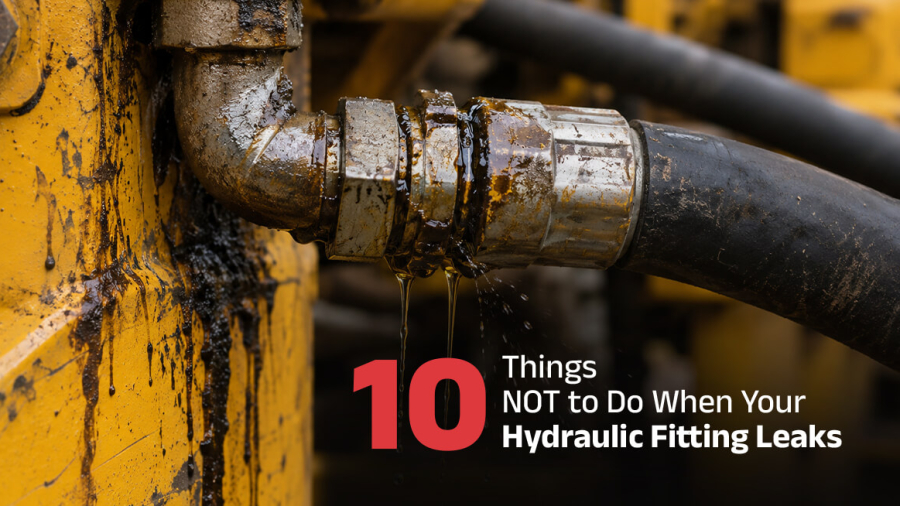
While leaking hydraulic fittings may seem like a small problem, they can actually show there is a bigger problem in terms of connections, sealing surfaces or operating conditions. Tackling them like a regular problem that only needs to be tightened can worsen things. Moreover, checking a pressurized hydraulic fitting without appropriate measures can put one at risk of getting injured. It is essential to know what should not be done before trying to solve a problem and why.
1. Do Not Use Your Hand To Detect Leaks:
One should never run his or her hand over a hydraulic hose or fitting to identify a leaking spot. The hydraulic fluid may enter the skin even if it leaks from a small hole because of its pressure. It is called the high-pressure fluid injection injury and requires medical attention.
In such cases, it is recommended to stand away from the fitting suspected of leaking and check the equipment according to its manufacturer’s guidelines. One should never try to detect the escaping liquid with their hands.
2. Do Not Inspect the Fitting When the System Is Pressurized:
A hydraulic system is capable of storing the pressure even when the equipment is turned off. Loosening a fitting that is under pressure may lead to the sudden outflow of fluid and injuries.
Before inspecting and maintaining the equipment, turn it off, isolate the hydraulic system, and relieve the pressure in accordance with the recommendations provided by the manufacturer. Let the hot components and hydraulic fluid cool down as well. Turning off the machine alone does not guarantee safety while working on the system.
3. Do Not Tighten the Fitting Without Finding the Problem First:
It might be tempting to solve the leakage problem by tightening the fitting further. But over-tightening the fitting is capable of damaging the threads, seals, or other elements of the connection and will not solve the real problem.
There are certain methods of proper tightening based on the design of the fitting and manufacturer’s recommendations. Identify the cause of leakage by examining the connection and choosing the appropriate way of solving the problem.
4. Avoid Replacing It With an Alternative Looking Part:
Not all hydraulic fittings are identical despite looking alike since differences can occur in the form of the connection, type of thread, sealing mechanism or pressure ratings among others. The use of incorrect fitting replacement parts may result in poor sealing, damage to the connection or leaks.
Ensure that you have checked the fitting types before replacing the part to ensure compatibility rather than appearance only.
5. Do Not Think That The Leakage Originates From the Fitting:
Sometimes, fluid may appear near the fitting although the origin of leakage is somewhere else such as fluid coming from damaged hose, worn seal, a different connection or from moving along other components. The replacement of the fitting without tracing the leakage will mean leaving the underlying problem unsolved.
Ensure that you inspect the hose assembly and the connected component by following the manufacturer’s guide for inspection procedures. Check the point where the fluid is leaking from.
6. Do Not Reuse Worn Out O-ring:
An O-ring is very important in the prevention of leakage in the hydraulic connections. They wear out, deform or get damaged with time because of different pressures, temperatures and conditions.
Using the used O-ring for the fitting replacement could lead to the failure of the seal and the reappearance of the leak. Check the sealing element for any signs of deterioration, and replace it in case of necessity. It should be of the appropriate size and specification. The improper O-ring will not give a sufficient seal regardless of its proper installation in the groove.
7. Do Not Leave the Opened Connection Without Coverage During the Repair:
When the hydraulic connection is opened, the open ends become susceptible to any kind of contaminants, such as dirt, dust, moisture, etc., which can affect the hydraulic components.
Make sure that the disconnected elements, such as hoses, fittings, ports, etc., are properly protected during the maintenance. The cleanliness of the connecting elements is as important as the elimination of the leak.
8. Do Not Neglect the State of the Connection Surface:
The leaking fitting can continue to leak despite tightening or replacement if there is some damage to the connecting surface, such as scratches, damaged thread, dirt, etc. Scrapped sealing faces, damaged threads, dirt or deformation can hinder the sealing process.
Check the mating surfaces, threads and sealing surfaces for damage before you put things back together. A cleaning will not repair a damaged surface. Replace any parts which will not give a proper seal.
9. Avoid the Use of Flames Near a Hydraulic Leak:
When a hydraulic fluid is leaked as a spray, mist and meets a source of ignition, a fire hazard arises. The use of a flame for detecting the location of the leak is dangerous as well as using an open flame around the leaking hydraulic equipment.
Keep away flames, sparks and any other sources of ignition from the leaking hydraulic equipment. Follow fire-safety procedures at the site and attend to the leak after making the equipment safe.
10. Don’t Ignore a Small Leak or Patch it Up Temporarily:
A small leak must never be considered a problem that can wait forever. It may signify a faulty seal, incorrect fitting installation, damage to the components and problems with the assembly.
Temporary solutions may plug up the leak momentarily without addressing the root cause. Continual operation will result in fluid loss, poor system performance and further damage to components. Identify the source, carry out the necessary repair and verify that the connection is functioning correctly before returning the equipment to service.
What Actions Should Be Taken if the Hydraulic Fitting Becomes Leaky?
Taking proper actions starts with securing the machine. The hydraulic system should be shut down, isolated and the pressure drained as per instructions provided by the equipment manufacturer. Then the source of the leak should be identified along with checking of the fitting, its seal, the connection and the hose assembly around the fitting.
Instead of tightening or patching the fitting that does not hold, damaged or improperly selected components should be replaced. Before restarting the machine, the connection should be inspected and put back together properly.
Conclusion
A hydraulic fitting leak cannot be considered a problem associated solely with the tightness of the connection. Proper identification of the cause, following the inspection procedure and replacement of the defective components are the key aspects to keep your hydraulic system working properly. Solving the problem from the very beginning will help avoid unnecessary damage and downtime.
Frequently Asked Questions:
1. What are the most frequent causes of hydraulic fitting leaks?
The leaks can be caused by damaged or worn out seals, improper selection of the fitting, improper tightening, damaged threads, contamination of the sealing surface or improper installation. Identifying the actual cause is important before replacing any component.
2. Can tightening of a hydraulic fitting eliminate the leak?
No, sometimes tightening can lead to the destruction of threads and sealing surfaces which will increase the leak.
3. Is it worth repairing a leaking hydraulic fitting or is it better to replace it?
The answer depends on the condition of the fitting and reasons for the leak. Sometimes replacement of sealing elements will be enough, but sometimes the fitting itself needs to be replaced because of the damage.
4. How do you prevent leaks in hydraulic fittings?
You should use correct fittings, install and tighten them according to the specification of the fitting manufacturer, keep the connecting surfaces clean, and perform inspection on a regular basis.